
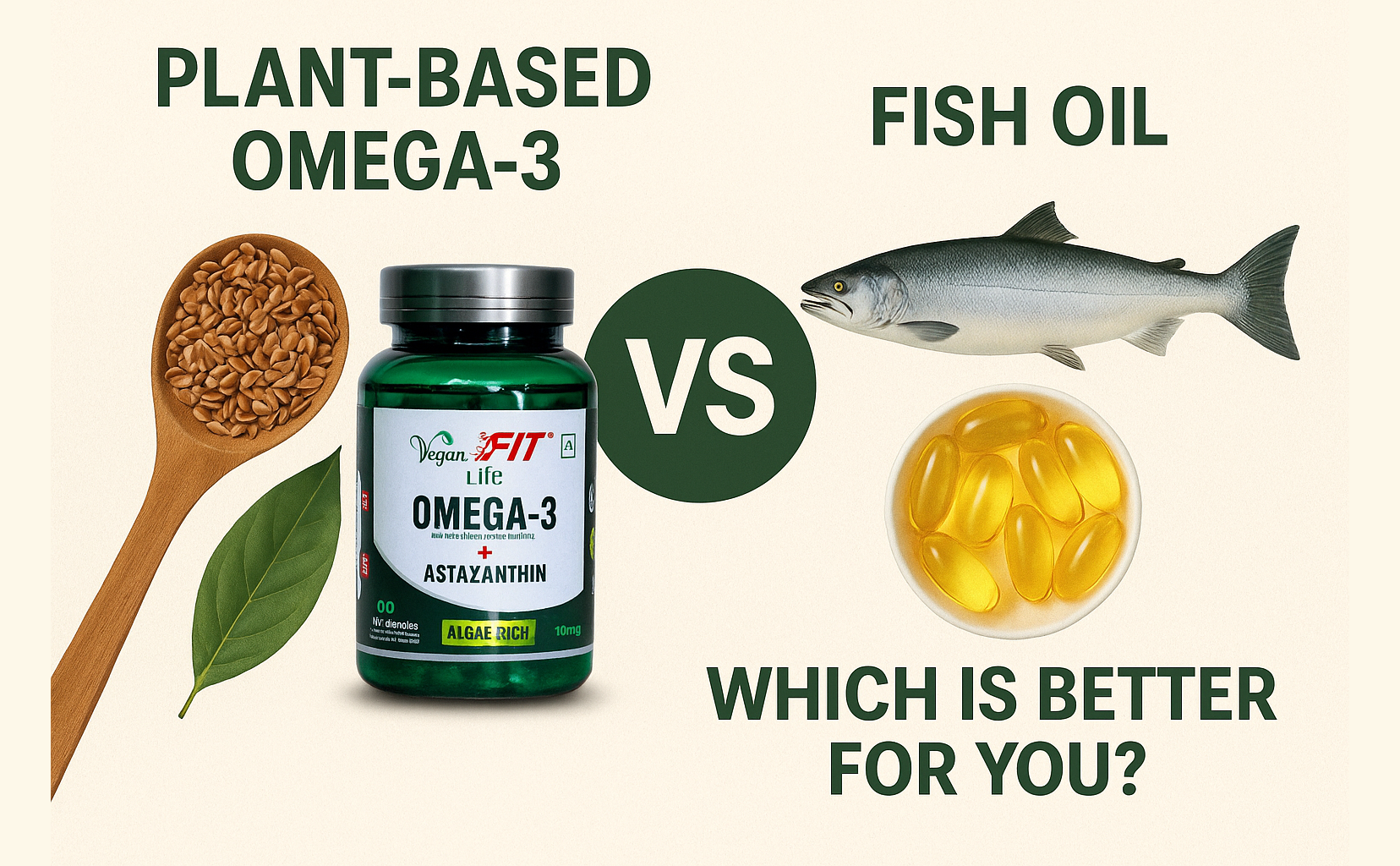
Many of us know that Omega-3 fatty acids are important for heart, brain, skin, and overall health. But which is better – Plant Based Omega 3 vs Fish Oil? It can get confusing. Let’s talk in simple terms, look at real numbers, and help you choose what’s best – especially if you follow a vegan lifestyle or just want a cleaner, more sustainable option.
What Makes Omega-3 Important?
Our bodies cannot make Omega-3 on their own, so we must get it from food or supplements. There are three main types:
-
ALA (Alpha-Linolenic Acid): Found in plant sources like flaxseed, chia, walnuts.
-
EPA (Eicosapentaenoic Acid) and DHA (Docosahexaenoic Acid): Found mainly in fish and algae. These are the forms directly used by our body for heart and brain support.
Fish Oil: Traditional but With Challenges
Benefits:
-
Fish oil is rich in EPA and DHA, which help reduce triglycerides, support heart health, and may prevent stroke and heart attacks.
-
Some large studies have shown these benefits; other studies are mixed but still show good outcomes when used correctly.
-
One study in BMJ found people with the highest omega-3 levels (from seafood) had 18% lower risk of unhealthy aging.
Drawbacks:
-
Fish oil can contain heavy metals or toxins, depending on the source.
-
Environmental concerns – overfishing and sustainability issues are real.
-
Some people don’t like the taste or have fish allergies.
-
High doses (above 1 g/day) may increase risk of atrial fibrillation in older adults.
Plant Based Omega 3: A Clean Alternative
Types & Sources:
-
Flaxseed, chia, walnuts, hemp – all high in ALA. But the body must convert ALA into EPA/DHA, and this process is not very efficient.
-
Microalgal (algae) oil – a direct plant-based source of EPA and DHA.
Evidence:
-
Clinical trials show DHA-rich microalgae oil can lower triglycerides and oxidative stress, just like fish oil.
-
Reviews confirm that algal oil increases DHA and EPA levels consistently, whereas flaxseed oil only raises ALA, not DHA.
-
One analysis found that algae oil matches fish oil in bioavailability, with added benefits: no marine contaminants, better sustainability.
Additional Benefits:
-
No risk of fish-related toxins or heavy metals.
-
Cleaner, safer option – especially for older adults or pregnant women.
-
More eco-friendly – does not involve overfishing.
Quick Comparison Table
| Feature | Fish Oil (EPA/DHA) | Plant-Based (ALA) | Algal Oil (EPA/DHA) |
|---|---|---|---|
| EPA/DHA | High, directly available | Low; conversion needed | High, directly available |
| Health Benefits | Well-supported by studies | Limited due to poor conversion | Similar to fish oil |
| Safety Concerns | Possible toxins, over-fishing | Very safe | Very safe and sustainable |
| Ideal For | Non-vegans, no fish allergy | Vegans, but may need more | Vegans, older adults, pregnant |
What Research Tells Us
-
Algal oil works as well as fish oil in reducing heart risk factors.
-
Flaxseed raises ALA but does not boost DHA levels.
-
Algal oil increases DHA/EPA reliably.
-
Environmental and contamination concerns make algal oil more appealing.
As we get older, our heart, brain, and skin need more support. Fish may not always be part of our diet – especially for vegetarians – or may cause worry about purity or contamination. Getting enough EPA and DHA directly is important.
Plant-based ALA from flaxseed or walnuts is good, but the body’s conversion to EPA and DHA is weak. So if fish isn’t your regular food, a supplement with microalgal Omega-3 is a smart choice.
Let me show you an easy, clean option.
Recommended Option: Omega-3 + Astaxanthin (Plant-Based, Vegan)
You can try Omega-3 + Astaxanthin by Vegan Fit Life. It’s a plant-based supplement that combines:
-
Algae Veg DHA (400 mg) – direct, effective Omega-3
-
Sea Buckthorn (100 mg) and Flaxseed (96 mg) – nourishing plant extras
-
Astaxanthin (4 mg) – a powerful antioxidant for skin and overall health
(Plus no artificial additives, vegan, hypoallergenic)
Product link – https://www.veganfitlife.com/product/omega-3-astaxanthin/
This blend supports:
-
Heart health
-
Brain function
-
Glowing skin
-
Better immunity
It’s safe, natural, and easy to take – just 1–2 capsules with meals daily.
Final Thoughts
-
Fish oil does offer EPA and DHA directly, but comes with environmental and purity concerns.
-
Plant-based ALA is healthy, but body conversion to EPA/DHA is limited.
-
Algae-based Omega-3 (like your product) gives direct EPA/DHA, is vegan, clean, and effective.
-
Great choice for 40+ Indians who want a reliable, natural, and sustainable way to support heart, brain, and skin health.
In simple terms: If you follow plant-based diets or want a cleaner alternative to fish oil, choose algae-based Omega-3 supplements. They’re just as effective as fish oil for heart and brain health, but much safer and kinder to our planet.
Try Omega-3 + Astaxanthin today – it’s a smart, modern choice that blends traditional Ayurveda (like flaxseed, sea buckthorn) with science-backed Omega-3. Your heart, brain, skin – and our environment – will thank you.